
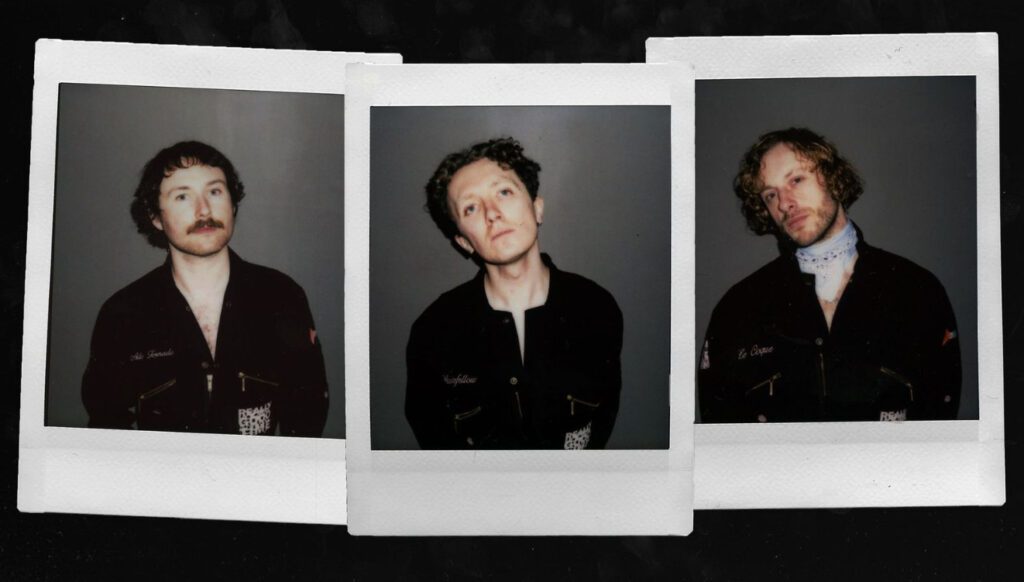
Dublin’s Really Good Time have rapidly emerged as one of the most compelling voices in the contemporary music scene. Following a whirlwind run at SXSW and a high-profile nod as one of The Great Escape’s ‘First 50,’ the band has garnered significant attention. Their sound, described by Steve Lamacq by Steve Lamacutely unique sound, described by Steve Lamacq by Steve Lamacutely sound—described by industry veteran Steve Lamacq as a “mutant blend of early Queens of the Stone Age and The Walkmen”—has solidified their reputation as a must-watch act.
A New Chapter as a Power Trio
The band’s trajectory shifted significantly following the departure of their founding guitarist, The Duke. Rather than faltering, drummer Ado Tornado and frontman Wastefellow leaned into the challenge, retreating to write and refine their sound. The result is a leaner, more intense sonic identity. “Instead of adding layers, we made each instrument bigger and more focused,” Ado explains. “Everything’s cleaner, clearer, but also meaner. The energy has gone into the dirtier range.”
This evolution was put to the test at the In the Meadows Festival in Dublin, where they were handpicked by Iggy Pop. Despite the pressure of performing as a three-piece for the first time, the band thrived. “It was the first scary gig I think we’d ever had,” Wastefellow recalls. “We kind of had to relearn and rework some songs… it was like the first time ever going into something thinking I genuinely don’t know what’s gonna happen here.”
Surrealism as a Critique of Reality
Central to the band’s ethos is the belief that in an increasingly chaotic world, traditional forms of critique may no longer suffice. Wastefellow, who draws inspiration from the absurd, notes, “Sometimes the only way to show how messed up things are is to meet the absurd with more absurdity. Surrealism becomes the only way to critique reality.”
This philosophy is evident in their latest track, ‘Bob Dylan Was on Pawn Stars in 2010.’ Born from an existential spiral following a film screening, the song tackles the death of counterculture and the absurdity of modern existence. “I had this genuine existential freak out on the bus, but then realized also how ridiculous that is to be having a freak out about that,” Wastefellow says. “It’s a microcosm of trying to wake yourself up from self-pitying or doom-scrolling.”
Community and Creativity
Beyond their sonic output, Really Good Time remains deeply embedded in a supportive Dublin music scene. They emphasize the importance of camaraderie and the lack of gatekeeping among their peers. However, they are also vocal about the systemic challenges facing artists, particularly the loss of grassroots venues. “Constricting the spaces where you can put on those nights where bands can intermingle affects the scene,” Wastefellow notes.
As they look toward a busy year of touring and the promise of a “long-form collection” on the horizon, the band remains committed to their vision. Whether through their stylized stage personas or their surrealist music videos, Really Good Time continues to turn the darkness of the modern world into a sonic black mirror, inviting listeners to find positivity in the face of the absurd.