
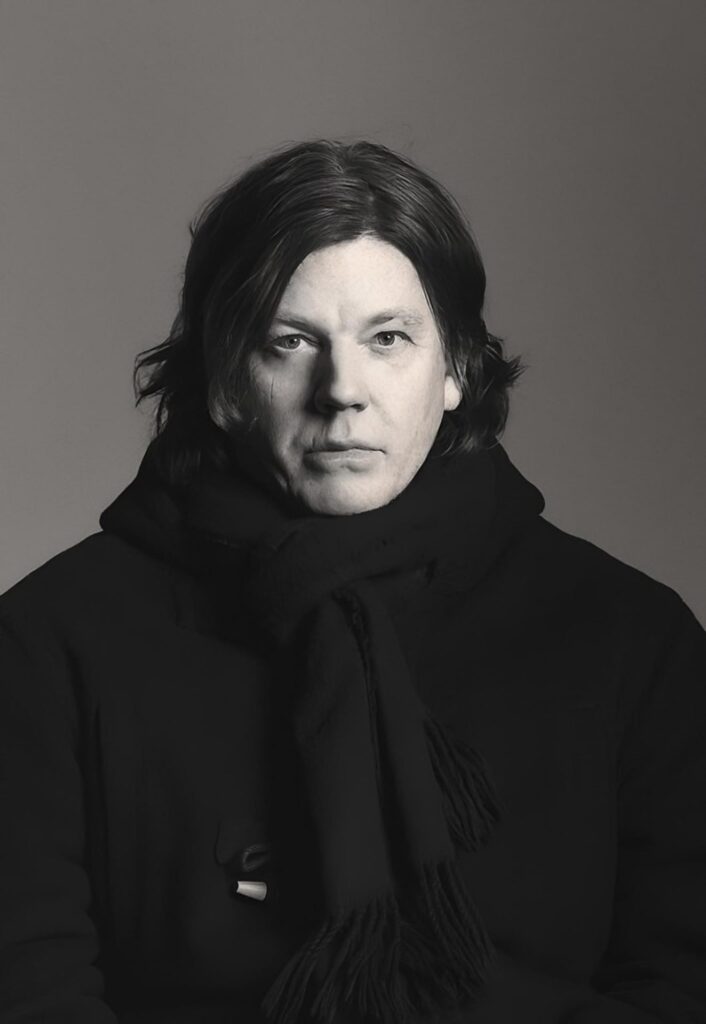
Almost forty years after John Andrew Fredrick formed the black watch in Santa Barbara, the band continues to defy expectations with their prolific output. Their twenty-sixth album, Varied Superstitions, stands as a testament to Fredrick’s enduring creative spirit—a record that feels destined for year-end accolades. In a recent conversation, Fredrick opened up about his deep-seated Anglophilia, his reverence for literary tradition, and his famously uncompromising stance on the political landscape.
A Legacy of Influence and Adaptation
When asked about the frequent comparisons to British post-punk and janglepop icons, Fredrick remains characteristically humble yet insightful. He traces the band’s DNA back to the influence of The Beatles and the London-Canadian group The Lucy Show. “I started the band, quite notoriously, because I saw The Lucy Show,” he admits. “They were the closest thing to The Cure meets The Beatles. I started the band the next day because of them.”
Fredrick acknowledges that while he has spent decades honing his craft, he is not above admitting his influences. He views the act of songwriting as a continuous dialogue with the past. “Paul McCartney always used to say, ‘We pinch from everyone,’ so I’ll just beg off and say I admit that as well,” he says. He notes that while he attempts to mask certain influences—particularly the psychedelic and literary elements found in the work of Robert Smith—he believes it is pompous for artists to claim they are influenced by no one but themselves.
The Anglophile Perspective
Fredrick’s connection to the UK goes beyond musical inspiration; it is a cultural and personal affinity. Having spent significant time in Britain, he finds a sense of belonging in its pubs and bookstores. “Everyone’s such a Dickensian character, and I’ve spent so much time there and feel so comfortable,” he explains. While he remains based in California, where he balances his music career with teaching tennis to children, his heart often resides in the literary and social fabric of London.
I try to leaven pretty much everything that I do with some kind of humour, otherwise you can become some kind of a zealot.
Navigating the Modern Climate
Perhaps the most striking aspect of Fredrick’s philosophy is his deliberate detachment from modern politics. He views the current era of propaganda and polarization with profound skepticism. “I hate politics, I don’t vote,” he states plainly. “I would just urge people to be more skeptical. All of my heroes from the 18th century—Pope, Johnson, Boswell, Swift in particular—would have urged people not to embrace zealotry on, well, anything, really.”
Despite the weight of the world, Fredrick maintains a lighthearted, almost detached perspective on his career. He laughs off the industry’s obsession with the “new,” noting that while he has released over two dozen albums, he finds joy in the process rather than the pursuit of fame. “I try to just behave as though my band IS huge!” he says. “I’ve gotten to do just what I wanted to do.”
Ultimately, John Andrew Fredrick remains a rare breed of artist: one who is deeply informed by the history of music and literature, yet entirely unburdened by the pressures of the modern industry. Whether he is channeling the jangle of the 80s or reflecting on the state of the world, his work remains as vital and accessible as ever.