
CANADA
Nicolás Méndez’s introduction to Rosalia was kismet. The Spanish director was in Barcelona with producer Pablo Díaz Reixa, better known as El Guincho, who was producing her second album, El Mal Querer. Rosalía had come with him to the studio and played a few songs from the record — it was “probably ‘Pienso en tu Mira’ and ‘Malamente’,” he recalls. Both tracks would become the leading singles of the now widely acclaimed project, and accompanying music videos he was responsible for directing. At the time, Rosalía was an independent artist with little budget, but Méndez’s initial impressions of the ambitious singer-songwriter were already cemented. “We had to get close to [her],” he says.
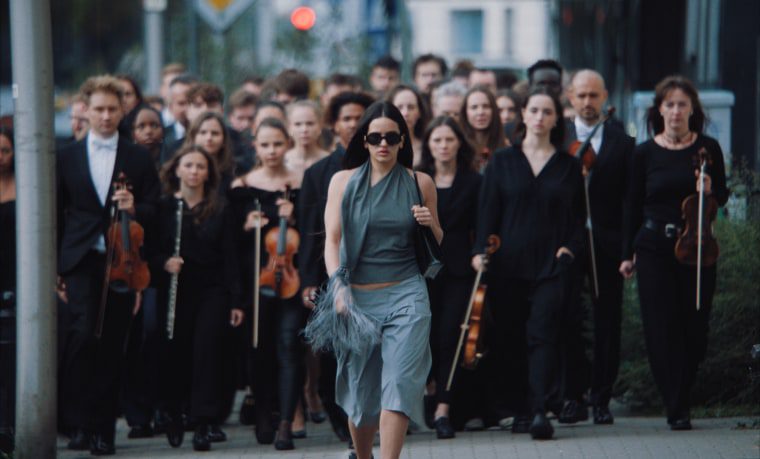
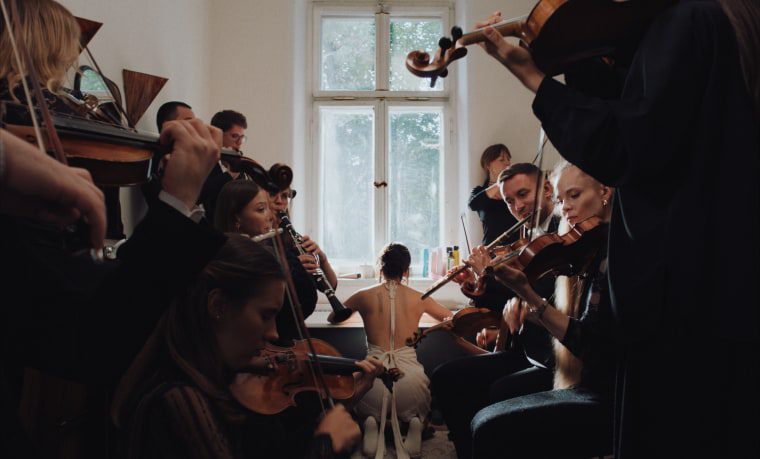
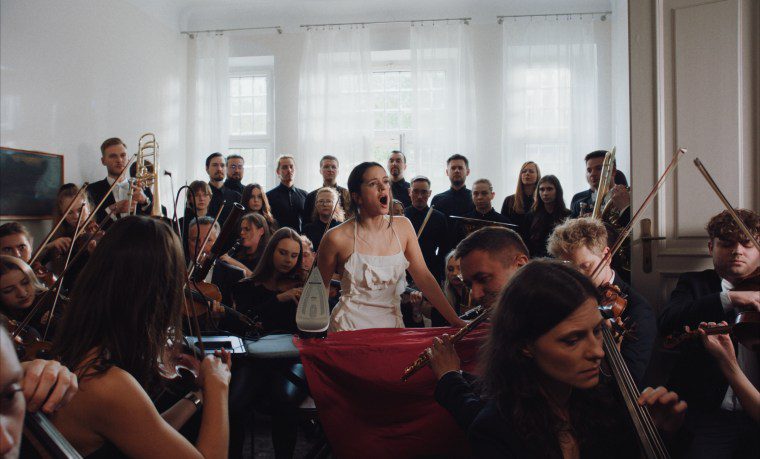
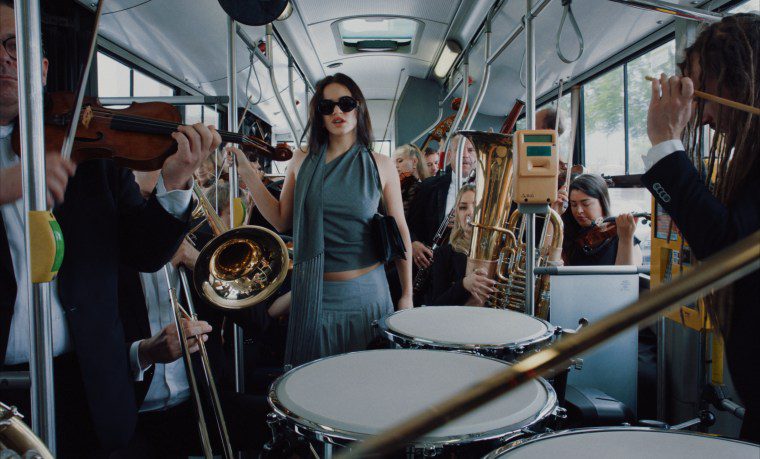
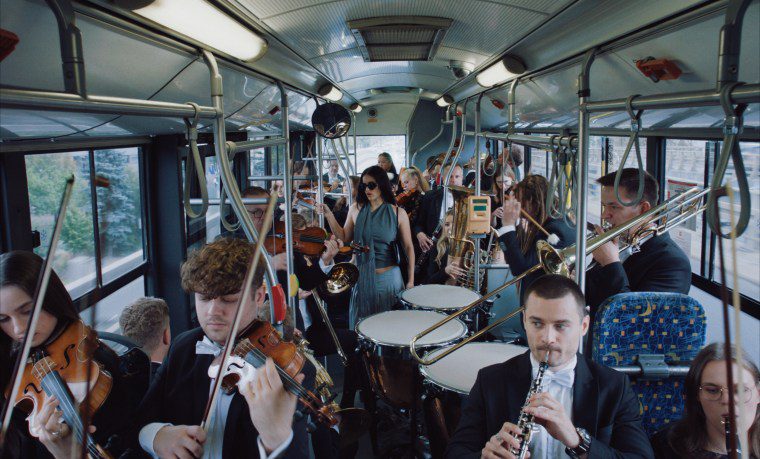
In the eight years following their initial meeting, Méndez has catapulted into a visual juggernaut, with many of his projects tied through CANADA, a creative production agency he co-founded alongside Lope Serrano in 2008. Most recently, he reunited with Rosalía to shoot “Berghain,” the experimental lead single off of her fourth studio album Lux. The three-minute visual follows Rosalía through the streets of Warsaw with an orchestra trailing behind her. What emerged from their weeks-long artistic collaboration was a creation studded with animalistic symbolism and Catholic imagery — and one of the most striking music videos of 2025.
Ahead, we caught up with Méndez over email to discuss how he brought “Berghain” to life and what he thinks makes a compelling music video in 2025.

The FADER: What is your background and creative journey? How did you get into directing?
Nicolás Méndez: I grew up in a house led by creativity. So, no surprise there. There was a lot of interest in literature, cinema, art, and food. My parents and both of my brothers have creative careers.
I studied art history [in school], but ended up writing scripts for TV during my second year. I wrote for a few years before trying to direct my own projects. Around the same time, a friend, who owned an independent record label in Madrid called Siesta, gave me money to make a music video for one of the label’s bands. Then I did another one, and another… and after a couple of years, a production company from Barcelona signed me to do commercials.
How would you describe your visual language as a director?
My inspiration comes from people in general and what happens to us. The stories that surround us. That’s where writing comes from. I like creating characters and exploring them. These small stories could be enlightening, uncomfortable, or edgy. But in this business, being edgy and specific is not always the easiest, and there’s a tendency to hide meanings.
I feel I’m constantly asked to be less specific so there’s less risk of misunderstanding. There’s a tendency [in the industry] to create generic worlds. Fighting against it is difficult, and I’m not a good fighter. I need confidence around me to bring out the best of me, and I find that very rarely. What I find is mostly fear.
How would you describe working with Rosalía?
I feel so lucky that she likes working with us because she’s brave and honest. Although she wants to appeal to a broad audience, she isn’t afraid of who she is, where she comes from, and what she likes. She is religious, and she is from Spain, so that goes into the mix. It’s wonderful having a platform to explain yourself without fear.
She isn’t afraid of who she is, where she comes from, and what she likes.
CANADA
CANADA
What did Rosalía tell you about “Berghain”?
I already had an idea of the album’s concept when they sent the song, as they told me about it months earlier, so I knew a bit about the world around it. But the song came with a note that mentioned different passages of the life of composer Hildegarda Von Bingen and goddess Vimala, and how the three voices in the song were different characters. It also mentioned [Rosalía] had to turn into a pigeon at the end.
How long did this project take from start to finish?
The song arrived on August 10 during my holiday in Asturias, Spain. I didn’t start working on the project until a couple of weeks later. I delivered the idea around August 25. We shot in Warsaw, Poland, in mid-September, and the video was delivered at the end of October.
Can you explain some of the symbolism and hidden details in the video?
Nothing is voluntarily hidden. If it looks like that, it might be because there’s a lack of time to explain things in a music video, but I don’t know. As I see it, everything is part of a narrative, and I tend to explain the story as well as I can with images, because I can’t use dialogue. There’s not much to be interpreted, really. I just look at the narrative, what she does, and put together what I think about. If you put everything she does together and pay attention to the details, it might tell you a story, but you have to pay attention because it’s a very short form of narrative, so the bits that move the story forward are very quick!
It wasn’t my intention to be cryptic at all. The symbolic aspect of it is very minimal; most of the imagery that could be thought of as symbols are just bits to explain the character or narrative, or help the story.
CANADA
What were some challenges you encountered when filming the video?
When I get a song for a video that I like very much, I struggle with a fear of possibly ruining it with my vision. That’s always my first challenge. But when I first heard [“Berghain’], I thought it was so good, I felt I could just shoot a cucumber for three minutes, and it would still work.
Apart from the usual money and time constraints, there was nothing that felt too difficult. But the use of the orchestra, figuring out which instruments needed to be featured in every shot, and placing them in the frame took a long time. The apartment itself took a while to scout because we had very limited time to shoot, and also, we needed an apartment that we could turn into a forest overnight. We finally shot in a house with two identical floors — we shot the orchestra scenes in one apartment and the forest in another, giving the impression that it was filmed in the same place.
Now that I think about it, my biggest challenge was letting go of so many ideas, shots, and beautiful places we found in Warsaw that were so inspiring. I found the place beautiful. Also, such nice people.
Music videos have changed significantly in how fans and audiences consume them. In your opinion, what role do music videos play nowadays? What makes a compelling and successful music video to you?
I don’t see much difference, [but] to me, a successful music video is one that you watch from beginning to end and want to watch again for whatever reason. It should represent the artist in the way they want to be presented.
This interview has been edited and condensed for clarity.